A legacy since 1945 · Bombay
✦

Three Generations.
One Golden Thread of Cinema.

From the studios of Lahore to the silver screens of Bombay, the Mehras have spent more than seven decades where they belong: in the spotlight, and just behind it.

Our Story

A House Built on Applause

Some production houses are founded. Ours was destined. Few names in Indian cinema can trace a story like this one: it begins on a school stage in pre-Partition Lahore, passes through the great studios of Bombay's golden age, and is still being written today in features and television. Kamal Mehra, actor, producer and director, was a star before he was old enough to shave. His son Dharmindra Mehra leads the house now, with the same flair.

The Golden Age · Kamal Mehra

The New Era · Dharmindra Mehra

The Founder

Kamal Mehra: The Boy Who Chose the Spotlight
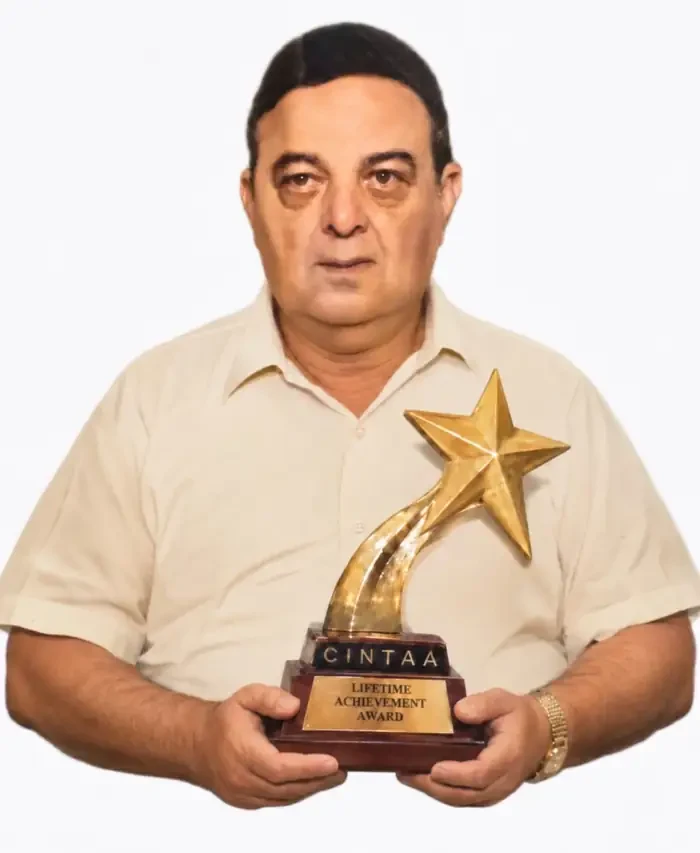
Kamal Mehra with the CINTAA Lifetime Achievement Award
With the CINTAA Lifetime Achievement Award
ActorProducerDirector
"Miracles happen to those who believe in them. I believed, and so they happened to me."
~120
Films as Actor
3
Produced
2
Directed
Lifetime Achievement Award
CINTAA · Cine & TV Artistes' Association

Every great film family starts with a small act of rebellion. Kamal Mehra's was turning his back on a merchant's ledger. The only son of a prosperous Amritsar trading family, he was meant for the family business, but anyone who watched him perform could see he was made for the movies. Sent to Lahore to continue his studies, he so charmed his new school that the principal put every dramatic and musical function in his hands.

Then came the night that changed everything. In the packed hall at the school's annual function sat D.M. Pancholi, the most famous studio owner of the age. The very next day the boy stood in Pancholi's bungalow, where he was praised to the skies and offered a monthly retainer, an envelope of money pressed into his hands as a token. It was winter in Lahore, and he was perspiring with excitement. He had been signed by the biggest name in the business before he had even finished school. He debuted as a child star in Pat-Jhad and Kahan Gaye.

Partition carried him to Delhi, where the great Kidar Sharma promptly signed him for three films. By 1948 he was in Bombay, and he never looked back. Across nearly 120 films in leading and comic roles, he became one of the best-loved faces of the golden age. Consider the company he kept: Pancholi, Kidar Sharma, Raja Paranjpe, A.R. Kardar, Mahesh Kaul, N.C. Sippy, Manmohan Desai, Homi Wadia. A who's who of Indian cinema.

Acting was only half of it. He turned producer with Saat Samandar Paar (1965), which its posters proudly billed as "Kamal Mehra's" own production. Then came the Pride of Asia Films banner, under which he produced Kismat (1968), directed by the great Manmohan Desai, and produced and directed Naami Chor (1977). He directed once more with Mit Jayenge Mitane Wale (1987).

Awards are one measure of a legacy. Songs are another. Kismat gave Indian cinema "Kajra Mohabbat Wala" and "Aao Huzoor Tumko", and nearly six decades on they still play at weddings and festivals across the country. Songs from a Pride of Asia production have simply outlived their era.

  • Honoured with the Lifetime Achievement Award by CINTAA, the Cine & TV Artistes' Association, for his outstanding contribution to the Indian film industry
  • Multiple accolades across a career of five decades and nearly 120 films
  • Kismat (1968) and its evergreen "Kajra Mohabbat Wala" and "Aao Huzoor Tumko", still among the most loved songs in Hindi cinema
  • Creative to the last, making short films for the Brahma Kumaris and much-loved advertising work
Kamal Mehra · Through the Years

Carrying the Torch

Dharmindra Mehra: Showmanship, Inherited

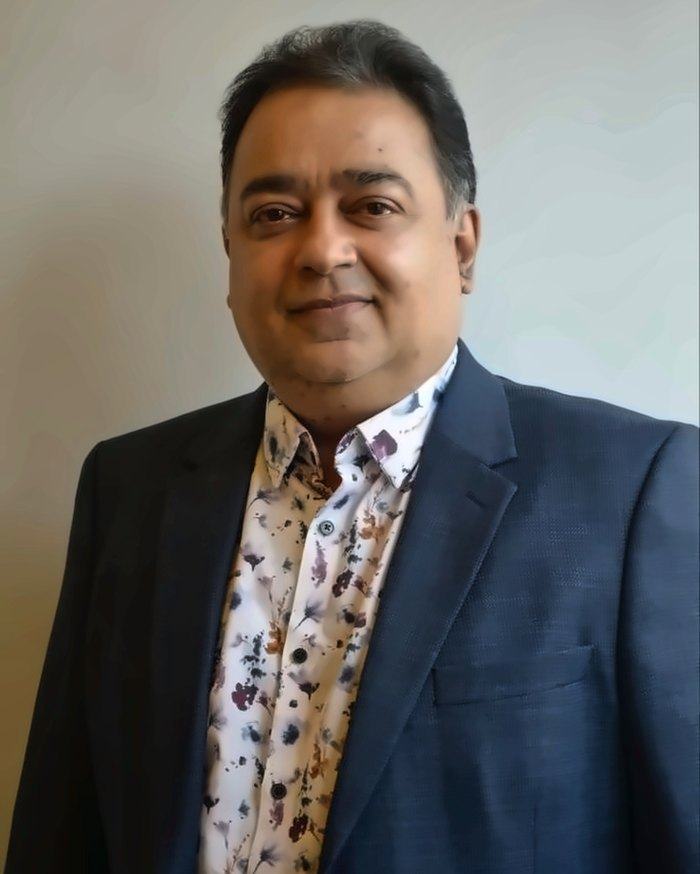
Dharmindra Mehra
Dharmindra Mehra
Producer

Born and brought up on film sets, Dharmindra Mehra watched his father work the golden age from the inside, and the fascination never left him. The stage claimed him early. Dramatics in school, then Dramatics Secretary of his college, and ten to fifteen intercollegiate festivals as an actor, with an award from nearly every one of them. Among his favourites: a turn in Teen Bandar, written by Kader Khan himself.

Armed with a Master's in Business Management, he stood at a crossroads: business, a corporate career, or cinema. The genes won. His father's counsel was plain. First assist, and learn the intricacies of filmmaking. It is not as simple as it looks. So he did, spending his apprentice years on sets and in the family's production office, learning the craft the way his father had. From the floor up.

"Films run in my genes. The stage found me before I went looking for it."

When the time came for his own projects, his father had one more piece of advice: partner with someone experienced, who has a name. Then he saw Haasil, and he knew. He sought out its young director, Tigmanshu Dhulia, and a partnership was born. On Dhulia's advice they began with television. Woh Dus Din (2005) for the Star network was adored by channel and audience alike and became an awards finalist; Aek Chabhi Hai Padoss Mein (2006) on Star Plus followed. There was no looking back.

The big screen followed. He was creative producer on the Hindi feature I Love Desi (2015), and his partnership with Dhulia reached cinemas too: associate producer on Saheb, Biwi Aur Gangster 3 (2018), starring Sanjay Dutt, and executive producer on Milan Talkies (2019). For Netflix's Torbaaz (2020), again with Sanjay Dutt, he served as associate producer. He has also gone where few producers do, into regional cinema in Chhattisgarhi and Bhojpuri, with recent releases carrying the family name forward. Television, film, streaming, regional cinema. And, in his own words, still learning.

Few producers sit where Dharmindra Mehra sits. He is General Secretary of the Film Federation of India, the apex body of Indian cinema, and General Secretary of the Film Makers Combine. As Secretary of WIFPA he helps lead the Dispute Settlement Committee, and he is a member of IMPPA. The charge he is proudest of comes round every year: India's official entry to the Oscars is selected by the FFI under government authority, and he leads that process, convening the jury and staging the selection across the country.

"Our duty is the welfare of the Indian film industry, all twenty-four of its crafts, and above all the daily-wage workers who keep the cameras rolling."

The service goes well beyond boardrooms. For a decade, WIFPA under his stewardship has organised free cataract operations for anyone in the industry, "producer or spot boy", and their families. It stood by its producer members with financial support through the COVID shutdowns. There were also free eye-care camps, held every year from 2014 to 2017, and contributions to the Uttarakhand flood relief fund and to the victims of the Jammu & Kashmir floods. Next is a new WIFPA home, with a mini theatre, library and coffee shop, for the community that makes India's films.

Film Federation of India
General Secretary
FMC
Film Makers Combine
General Secretary
Western India Film & TV Producers' Assn.
Secretary
Indian Motion Picture Producers' Assn.
Member
Academy Awards · India's Official Oscars Entry
Selection Committee
Film Federation of India & People for Animals
Hon. General Secretary
Moments

In the Spotlight